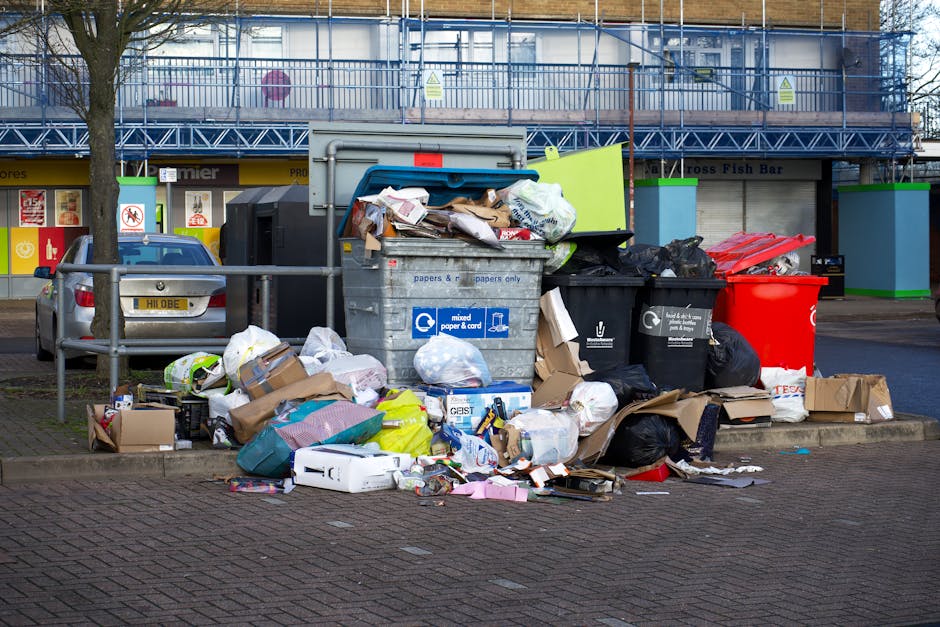
Fines and Legal Risks for Illegal Dumping in London
If you are dealing with unwanted waste in London, the temptation to "just get rid of it quickly" can be stronger than people like to admit. But illegal dumping, fly-tipping, and careless waste disposal can lead to serious fines, enforcement action, and a mess that follows you longer than you might expect. The legal risks are not just for the person who tips the waste; landlords, businesses, contractors, and even householders can all get pulled into the fallout if they have not checked the chain of responsibility properly.
This guide explains the fines and legal risks for illegal dumping in London in plain English. You will learn what counts as illegal dumping, how liability can arise, what councils and enforcement teams typically look for, and how to avoid the kind of mistake that turns a simple clearance into a very expensive problem. A lot of this comes down to common sense and paper trails, honestly, but the details matter.
Table of Contents
- Why fines and legal risks for illegal dumping in London matter
- How fines and legal risks for illegal dumping in London works
- Key benefits and practical advantages of doing it properly
- Who this is for and when it makes sense
- Step-by-step guidance
- Expert tips for better results
- Common mistakes to avoid
- Tools, resources and recommendations
- Law, compliance, standards, and best practice
- Options, methods, and comparison table
- Case study or real-world example
- Practical checklist
- Conclusion
- Frequently asked questions
Why Fines and Legal Risks for Illegal Dumping in London Matters
Illegal dumping is more than an eyesore. In London, it can become a neighbourhood issue, a public health nuisance, a fire risk, and a legal headache all at once. A single abandoned sofa, builders' rubble pile, or bagged pile of mixed rubbish can trigger complaints, investigations, and enforcement activity. And once that happens, the costs are rarely limited to removal fees.
The legal risk exists because waste has to be handled by someone responsible. If the waste came from your property, your business, your renovation job, or your van, authorities may ask who produced it, who moved it, and whether the transfer of waste was lawful. That is where things get awkward. No one enjoys being asked to prove where a pile of debris came from, but in a compliance situation, "I honestly thought it was fine" is not much of a defence.
There is also a reputational angle. A dumped mattress outside a block of flats or a broken wardrobe left behind a terrace in South London can make residents suspicious fast. If you are a landlord, property manager, builder, or office manager, the damage to trust can be as painful as the fine itself. To be fair, that is often what bites first.
Practical takeaway: the safest approach is not just to avoid dumping waste yourself, but to be able to show that any waste you arranged was handled lawfully, by a suitable carrier, with a clear audit trail.
How Fines and Legal Risks for Illegal Dumping in London Works
At the street level, illegal dumping is often called fly-tipping. In simple terms, it means leaving waste somewhere it should not be left, without the proper permission or lawful disposal route. That can range from one black sack dumped beside a wall to a full lorry load of construction waste tipped in a layby. The scale changes the seriousness, but the underlying problem is the same.
In practical terms, enforcement can involve a few different routes. Councils may investigate reports from residents or passers-by. Officers may look at the waste itself for names, addresses, receipts, labels, delivery packaging, or other clues. If the waste appears linked to a business or a particular property, the net can widen quickly. Cameras, witness statements, vehicle sightings, and licence plate records can all become part of the picture.
People are often surprised that liability is not always limited to the person who physically left the waste. If you paid someone cheaply to "take it away" and that person dumped it illegally, you may still face questions if you failed to check they were legitimate. That is why using a proper, documented waste removal process matters so much. If you are clearing a home, garage, or office, it is worth using a provider with a clear service scope such as waste removal or, for larger domestic jobs, house clearance or home clearance.
In some situations, the immediate issue is not a prosecution but a fixed penalty or enforcement notice. In others, the case can escalate into court proceedings. The exact route depends on the facts, the amount of waste, the location, the evidence, and whether there is a pattern of repeat behaviour. One-off negligence and deliberate dumping are not treated the same way, but neither is something you want on your doorstep.
There is a very human detail here: people often think illegal dumping looks obvious only when there is a mountain of rubble by the roadside. But even a small pile behind a garage can create legal exposure if it is linked back to you. A bag, a label, a receipt, a van load, one delivery slip. That is often all it takes.
Key Benefits and Practical Advantages
It may sound odd to talk about benefits in a legal-risk article, but doing waste disposal properly does give you real advantages. The biggest one is peace of mind. You are not waiting for a notice, a complaint, or a knock on the door. You know what happened to the waste, who handled it, and where the responsibility sits.
There is also a cost benefit in the long run. Illegal dumping can lead to clean-up bills, enforcement costs, potential fines, and sometimes disruption to access, trading, or property use. A quick "cheap" fix can become the expensive option very fast. That is a classic London story, really. What looks like saving money on Friday becomes a headache by Tuesday.
Another practical advantage is better project planning. If you are doing a renovation, office refresh, or garden tidy-up, lawful waste handling keeps the job moving. Builders do not have to stop mid-project because materials are piling up. Tenants are not left with bulky items blocking a hallway. Businesses can avoid complaints from neighbouring premises and protect their working environment. For trade and commercial waste, a proper service such as business waste removal or builders waste clearance is usually much cleaner from a compliance point of view.
Finally, lawful disposal supports better recycling and sorting. Mixed waste thrown in a layby is not just illegal; it is also usually harder to recover or reuse. If sustainability matters to you, that is worth thinking about. The right disposal route is not merely safer, it is often better for the materials themselves.
Who This Is For and When It Makes Sense
This topic matters to a surprisingly wide group of people. Homeowners clearing a loft. Landlords dealing with abandoned furniture. Builders finishing a refurb. Office managers clearing old desks and monitors. Gardeners with bags of soil and cuttings. Even people handling a one-off move can get caught out if they pass waste to the wrong person.
It makes sense to pay attention if any of these sound familiar:
- You have waste that cannot be left in ordinary domestic bins.
- You are hiring someone to collect rubbish or bulky items on your behalf.
- You are clearing a property after a tenancy, sale, or probate situation.
- You are a business trying to avoid reputational or compliance problems.
- You have builders' rubble, old fixtures, broken furniture, or mixed bulky waste.
If the items are mostly furniture or domestic contents, a focused service such as furniture clearance, furniture disposal, flat clearance, or loft clearance may be more suitable than trying to improvise. That last part matters more than people think. A rushed decision tends to create extra waste, and extra waste creates extra risk.
There is also a timing issue. If waste is left outside "just for the night," that can still be enough to create problems, especially in busy London streets where enforcement, neighbours, and passers-by are quick to spot it. One small lapse, and suddenly it is a very public issue.
Step-by-Step Guidance
If you want to avoid fines and legal trouble, use a calm, structured approach. It is not glamorous, but it works.
- Identify the waste properly. Separate household items, garden waste, building rubble, electrical items, and anything potentially hazardous. Mixed waste is usually the hardest to manage well.
- Work out who is responsible. Ask: did the waste come from your home, your job, your tenant, your contractor, or a third party? Responsibility matters more than convenience.
- Choose a lawful route. Use a service that can handle the volume and type of waste. For heavier clearances, a specialist option like garage clearance or garden clearance may fit better than a generic pickup.
- Check the provider carefully. Ask how the waste will be collected, where it will go, and what paperwork or confirmation you will receive. A legitimate operator should be able to explain the process plainly.
- Keep evidence. Save messages, invoices, photos of the waste before collection, and any confirmation of removal. If questions arise later, this becomes very useful.
- Do not hand waste to an unknown collector. This is where people get caught. A cheap cash offer from a van can look convenient. It can also be exactly the wrong choice.
- Follow up on unusual items. Items like fridges, paint, chemicals, tyres, and some electrical waste need extra care. If you are unsure, ask before the collection happens.
If you are planning a larger project, it can help to compare options in advance. For example, a household emptying after a move may need house clearance, while a company relocating equipment might need office clearance. That simple distinction can reduce both risk and delay.
Expert Tips for Better Results
Over time, the same problems keep showing up. The people who stay out of trouble usually do a few small things consistently.
- Take photos before anything moves. It sounds obvious, but when there is a dispute later, those pictures help show what was collected and in what condition.
- Keep waste streams separate where practical. Timber, soil, furniture, and general rubbish are easier to deal with when they are not all piled together.
- Be realistic about volume. A single car boot load is one thing. A packed cellar after a renovation is another. Underestimating volume leads to rushed decisions.
- Check access before collection day. In London, access can be tight. Stairs, controlled entry, parking restrictions, and narrow streets all affect how waste is removed safely.
- Use written instructions for staff or tenants. If you manage property, do not assume everyone knows the rules. Spell it out. Plainly.
One practical thought: if waste is being moved from a property with multiple occupants, leave a note about what is being removed and when. It avoids confusion, and confusion is where arguments start. Not always, but often enough.
Also, do not overcomplicate it. The goal is not to become a waste-law scholar by Tuesday morning. The goal is to avoid leaving yourself exposed.
Common Mistakes to Avoid
Illegal dumping often starts with a tiny mistake that felt harmless at the time. That is the annoying part.
- Assuming "someone else will handle it." If you arranged the removal, you may still have questions to answer if it goes wrong.
- Using unverified collectors. A low price is not a plan. It is just a low price.
- Leaving waste outside too early. In busy streets, waste left out overnight can disappear, be added to, or attract complaints.
- Mixing rubbish with reusable items. Once items are blended together, they are harder to sort and easier to mishandle.
- Ignoring business waste duties. Commercial waste has a different compliance feel from a household clear-out, and businesses should treat it carefully.
- Failing to document disposal. If there is no record, there is no easy way to show you acted responsibly.
Truth be told, many fly-tipping disputes begin with a familiar sentence: "I thought that was fine." It almost never helps. Better to ask one extra question than to explain yourself later.
Tools, Resources and Recommendations
You do not need a toolbox full of specialist software to manage waste properly, but a few basic habits make life easier.
- Phone camera: take before-and-after photos of the waste area and the items removed.
- Simple inventory list: jot down large items, bag counts, or categories of waste.
- Calendar reminder: useful if you need to put waste out at a specific time or coordinate access.
- Folder for records: keep quotes, messages, receipts, and collection confirmations together.
- Risk check: ask whether anything is sharp, heavy, dusty, chemical, or electrically risky before moving it yourself.
For property and home-related jobs, useful supporting pages can help you plan the job around the waste itself. If you are clearing a family property, home clearance may be relevant. If you are dealing with left-behind household items, flat clearance can be a better fit. If the job involves old sofas or tables, furniture disposal is worth considering alongside a wider clearance plan.
For pricing, check the service provider's pricing and quotes information before you agree to anything. That reduces misunderstandings later, which is one of those quiet little wins people appreciate after the fact.
Law, Compliance, Standards, and Best Practice
Without drifting into legal jargon, the basic compliance idea is straightforward: waste should be stored, transferred, and disposed of responsibly, and the person arranging the removal should satisfy themselves that the chosen route is legitimate. In the UK context, that usually means thinking about who collected the waste, how they handled it, and whether the waste was passed on lawfully.
Businesses should be especially careful. Commercial waste creates extra expectations around record-keeping, diligence, and proper handling. If you are managing an office or site, the safe approach is to treat waste as a compliance issue, not just an operational one. That includes recycling separation where practical and making sure contractors are not dumping on your behalf in a way that could come back to you later.
Best practice also extends to health and safety. Heavy items, sharp edges, broken glass, damp mouldy waste, and awkward access can all create physical risk. If you are planning a clearance, it is sensible to understand the provider's approach to safe handling and insurance. Pages such as health and safety policy and insurance and safety can give you a better sense of how a professional operation thinks about these issues.
And yes, the environmental piece matters too. Responsible disposal is not only about avoiding a fine; it is about keeping waste in the right stream. For many readers, that is where a service with a clear recycling and sustainability approach starts to make sense.
If you are a business, clear terms can also help prevent mistakes. Contract wording, access expectations, collection timing, and payment terms all matter. A glance at terms and conditions is never exciting, but it can prevent awkward surprises. Not glamorous, I know. Still useful.
Options, Methods, and Comparison Table
Different waste situations need different approaches. Here is a simple way to think about the main options.
| Approach | Best for | Risk level | Typical upside | Main caution |
|---|---|---|---|---|
| DIY disposal | Very small, ordinary household waste | Low if done correctly | Direct control | Easy to overload, mis-sort, or transport waste incorrectly |
| Van hire and self-haul | Moderate household or garden loads | Medium | Flexible timing | Parking, loading safety, and disposal location still matter |
| Specialist clearance service | Bulky, mixed, business, or awkward waste | Lower when vetted properly | Better process, less stress | Choose a legitimate provider and keep records |
| Unknown cheap collector | Usually nothing, really | High | Looks cheap upfront | Strong risk of illegal dumping and liability problems |
For many London households and businesses, the specialist clearance route is the safest balance of convenience and compliance. If the items are awkward, bulky, or there is any possibility of confusion later, that option usually pays for itself in reduced hassle alone.
Case Study or Real-World Example
Imagine a small landlord in East London clearing a flat after a tenancy ends. There are two wardrobes, a worn sofa, a mattress, and a few bags of mixed rubbish in the kitchen. The flat needs to be turned around quickly, and the landlord is tempted by a cheap local van that offers to "sort it all out" the same afternoon.
Instead, the landlord takes a more careful route. Photos are taken first. The items are listed. The clearance is booked with a proper provider. The waste is removed in one visit, and the landlord keeps the confirmation and invoice with the property file. A few weeks later, the building manager receives a complaint about dumped furniture in a nearby alley, but because the landlord kept records, the matter is easily shown to be unrelated.
That is the point, really. The legal protection is not magic. It comes from sensible steps, evidence, and using the right route from the start. The job feels calmer, too. You can hear the place again once the clutter is gone; less scrape, less bang, less lingering stress in the room.
Now, the opposite scenario. A business owner clears old office chairs and computer boxes, hands them to someone without checking anything, and later learns the items were dumped inappropriately. Even if the owner did not mean for that to happen, questions can follow about due diligence and responsibility. It is not the sort of call you want on a Thursday afternoon.
Practical Checklist
Use this checklist before any waste leaves your property.
- Have I identified exactly what needs removing?
- Are any items hazardous, heavy, or awkward to handle?
- Do I know who is responsible for the waste?
- Have I chosen a lawful disposal route?
- Have I checked the provider's process and terms?
- Will I keep photos, messages, and proof of collection?
- Am I avoiding cash-in-hand offers from unverified collectors?
- Is the waste being stored safely before removal?
- Have I separated items where practical?
- Do I need a specialist service for business, builders', or bulky waste?
If you can tick all of those off, you are in a much safer place. Not perfect, nothing ever is, but much safer.
Get a free quote today and see how much you can save.
Conclusion
The fines and legal risks for illegal dumping in London are serious because the consequences go beyond one messy pile of rubbish. There can be financial penalties, enforcement issues, reputational damage, and ongoing questions about responsibility. The good news is that most of the risk is avoidable with a sensible process: choose the right route, verify who is handling the waste, and keep proof.
If your job involves bulky items, mixed waste, builders' debris, or a property clearance, it is usually worth leaning on a proper service rather than trying to make a shortcut work. That is especially true in London, where access, speed, and local scrutiny can turn a small mistake into a bigger one fast.
Do it neatly, keep your records, and you will sleep better that night. Which, let's face it, is worth quite a bit.
Frequently Asked Questions
What counts as illegal dumping in London?
Illegal dumping usually means leaving waste somewhere it should not be left, or passing it to someone who disposes of it unlawfully. It can include bulky items, bags of rubbish, builders' waste, or even a small pile left in the wrong place.
Can I be fined if someone else dumped my waste?
Potentially, yes. If the waste can be linked back to you and you did not take reasonable care when arranging its removal, you may still face questions. Keeping records and using a legitimate collection route matters a lot.
Are businesses at higher risk than households?
Businesses often face more scrutiny because commercial waste carries stronger expectations around due diligence, record-keeping, and responsible transfer. That does not mean households are safe to be casual, though. They are not.
What is the safest way to get rid of bulky items?
The safest approach is to use a lawful collection or clearance service that matches the type and volume of waste. Furniture, office items, garden waste, and builders' debris may need different handling, so the right service matters.
Do I need proof that my waste was removed properly?
Yes, keeping proof is strongly advisable. Save messages, invoices, photos, and any written confirmation so you can show that you acted responsibly if there is ever a dispute.
Is fly-tipping the same as illegal dumping?
In everyday language, yes, people often use the terms interchangeably. Fly-tipping is the more common UK term for leaving waste illegally.
What should I do if I find dumped waste outside my property?
Take photos, avoid disturbing anything potentially unsafe, and report it through the appropriate local route. If the waste looks hazardous, do not handle it casually. That is the sensible bit many people skip.
Can a cheap van collection be risky?
Yes. If the collector is unverified, there is a real risk the waste may be dumped illegally. Low price alone is not a sign of legitimacy. Sometimes it is the opposite.
What documents should a business keep?
At minimum, businesses should keep collection records, invoices, instructions, and any written confirmation linked to the waste transfer. Clear records help show that the business took waste handling seriously.
How can I reduce the risk of accidental illegal dumping?
Use a reputable removal route, separate waste where possible, document everything, and never hand items to someone who cannot explain how they will dispose of them. Simple, but effective.
Do garden or garage clearances need special care?
They often do, because these clearances can include mixed materials, sharp objects, soil, old paint, or broken tools. Services such as garden clearance and garage clearance can help keep those jobs organised and lawful.
Where should I start if I need help with waste removal?
Start by identifying the type of waste and the scale of the job. Then look at the most relevant service, check the terms, and make sure you keep proof of what was collected. If you need support, the contact us page is the natural next step.